
High-End Home Cinema Projectors: The Definitive Buyer’s Guide
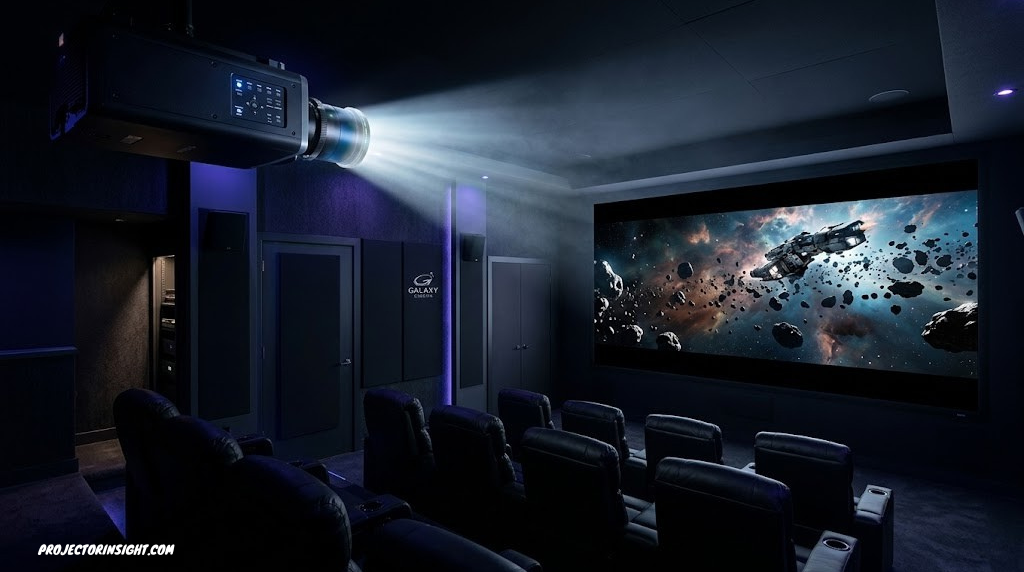
What “High-End” Actually Means in Home Projection
Walk into any electronics showroom and you’ll find dozens of projectors clustered under $1,000 that promise “4K” and “cinema-quality” in the same breath. Most of them are perfectly fine for a casual movie night in a spare bedroom. But there’s a different category entirely — projectors built by people who genuinely obsess over black levels, lens distortion, and color volume the way a luthier obsesses over the grain of a violin’s spruce top. That’s the category this guide covers.
High-end home cinema projectors share a handful of defining traits: imaging panels that are either truly native in resolution or use sophisticated pixel-shifting to get remarkably close, laser or LED light engines rated for tens of thousands of hours, motorized lenses with memorized presets, and processing chips powerful enough to perform real-time HDR tone mapping on a frame-by-frame basis. None of that comes cheap, but the difference in a darkened room, on a properly sized screen, is not subtle.
This guide walks through six of the most respected models currently available in this tier — three from JVC and Sony’s flagship LCoS lineups, one from Epson’s laser-driven 3LCD range, one from BenQ’s LED-powered DLP family, and one ultra-short-throw laser TV from Formovie for those who can’t or don’t want a ceiling mount. If you’re earlier in your research and unsure whether this tier is even right for your room, our overview of the best projectors for every budget and room size is a useful starting point before diving into the premium end of the market.
JVC DLA-NZ9 D-ILA 8K Laser Projector
JVC’s flagship 100mm all-glass lens projector with 3,000-lumen BLU-Escent laser and native 100,000:1 contrast.
View on Amazon #adHow We Evaluate High-End Projectors
Spec sheets alone don’t tell you which projector will actually look better on your wall. Manufacturers measure brightness differently, contrast claims range from honest native figures to inflated dynamic ratios that mean almost nothing in practice, and a lens that’s sharp dead-center can fall apart at the edges. Before ranking anything, it helps to understand the handful of variables that genuinely separate a great image from a merely adequate one.
Light Source & Panel Technology
Three imaging technologies dominate this tier: LCoS (used by both JVC, who brand it D-ILA, and Sony, who call theirs SXRD), 3LCD (Epson’s approach), and DLP (used by BenQ and Formovie, often combined with pixel-shifting or XPR to reach 4K resolution from a smaller native panel). LCoS designs tend to win on absolute black level and shadow detail thanks to their reflective liquid-crystal structure, which is part of why JVC and Sony command premium pricing even at similar lumen counts to their DLP and 3LCD competitors.
Brightness: ANSI vs. ISO Lumens
You’ll see both ANSI and ISO lumen ratings throughout this guide, and it’s worth understanding that the two use a comparable nine-point averaged measurement technique across the screen. In practice, reputable manufacturers measuring honestly with either standard produce broadly comparable, trustworthy numbers — the bigger risk is uncalibrated marketing specs from less established brands rather than any inherent flaw in one standard versus the other.
Native Contrast vs. Dynamic Contrast
Native contrast measures the simultaneous on-screen difference between the brightest white and darkest black a panel can produce without any laser dimming trickery — this is the number that actually correlates with perceived image depth in real content. Dynamic contrast, often listed in the millions, measures the projector’s full on/off range when the laser or lamp itself is allowed to shut down completely, which sounds impressive on a spec sheet but says very little about how a single frame with both bright and dark elements will render.
Lens Quality & Optical Design
An often-overlooked factor: the number of glass elements, the lens diameter, and whether the lens uses all-glass construction versus hybrid glass-plastic elements. JVC’s flagship 100mm 18-element lens, for instance, is a meaningfully different piece of engineering from the 65mm lens used on its own step-down sibling, and that difference shows up as both higher brightness and tighter edge-to-edge focus.
The Six High-End Projectors Covered in This Guide — At a Glance
Each of these models earned its place through a combination of brand reputation, genuine engineering differentiation, and consistent praise from independent reviewers and calibration professionals. They span a meaningful price range, from BenQ’s relatively accessible LED flagship to JVC’s no-compromise 8K-capable reference projector.
JVC DLA-NZ9
FLAGSHIPJVC’s top-tier 100mm all-glass lens D-ILA laser projector with 8K e-shiftX and class-leading native contrast.
JVC DLA-NZ8
SWEET SPOTNearly all of the NZ9’s performance with a 65mm lens, at a noticeably more accessible price point.
Sony VPL-XW7000ES
BRIGHT & SHARPNative 4K SXRD with the upgraded ARC-F lens and 3,200 lumens for larger screens and brighter rooms.
Sony VPL-XW5000ES
ENTRY LASER 4KThe most affordable native 4K laser SXRD projector on the market, sharing the same panels as its flagship sibling.
Epson LS11000
VALUE LASER3LCD pixel-shifted 4K with equal color and white brightness, ideal for rooms with some ambient light.
BenQ HT4550i
FACTORY-CALIBRATED4LED-powered DLP with individually calibrated color reports and 100% DCI-P3 coverage at an LED-class price.
Formovie Theater Premium
UST CONVENIENCETriple-laser ultra short throw “Laser TV” that sits inches from the wall with built-in Bowers & Wilkins sound.
The next several sections walk through each model individually with full specifications, pros and cons, and the kind of room and viewer each one suits best. If you’re shopping specifically for native 4K resolution rather than pixel-shifted approximations, jump ahead to our dedicated native panel comparison resource for additional context on the resolution debate.
Imaging technologies represented across the lineup — each has distinct strengths in black level, brightness efficiency, and color volume.

JVC DLA-NZ8 D-ILA Laser Projector
JVC’s performance sweet spot — 2,500-lumen BLU-Escent laser, 65mm all-glass lens, and 8K/e-shiftX upscaling.
View on Amazon #adJVC DLA-NZ9 — The No-Compromise Reference Projector
If you want to understand why JVC’s D-ILA projectors command such loyalty among serious enthusiasts, the NZ9 is the clearest argument the company can make. It sits at the top of JVC’s Procision Series (also sold under the Reference Series badge as the DLA-RS4100), and nearly every spec on its sheet exists because JVC refused to cut a corner that would compromise image quality, even when a cheaper alternative was available.
The headline feature is the 100mm diameter, 18-element, 16-group all-glass lens — a full 35% larger in diameter than the 65mm lens found on the step-down NZ8. That larger lens isn’t just about brightness (though it does deliver a meaningful boost there); it’s primarily about edge-to-edge sharpness and minimizing chromatic aberration, especially when using JVC’s generous motorized lens shift range. Paired with JVC’s third-generation BLU-Escent laser diode light source, the NZ9 reaches a rated 3,000 lumens, a full 500 lumens brighter than the NZ8 thanks almost entirely to that superior optical path.
8K/e-shiftX and Native Contrast
The NZ9 uses native 4K D-ILA panels combined with JVC’s four-direction “8K/e-shiftX” pixel-shifting technology, which moves the image diagonally in all four directions at 240Hz to produce over 35 million addressable pixels — enough to genuinely resolve 8K content when fed an 8K signal through its dual 48Gbps HDMI 2.1 inputs. JVC rates native contrast at 100,000:1, with laser dimming pushing dynamic contrast figures dramatically higher in scenes with extreme brightness range.
🎯 JVC DLA-NZ9 Key Specifications
✦ Pros
- Best-in-class lens optics in JVC’s own lineup
- Exceptional native black level and shadow detail
- Hand-selected components for unit-to-unit consistency
- True 8K input support via dual HDMI 2.1
- 20,000-hour laser life eliminates bulb replacement costs
✦ Cons
- Premium pricing puts it well beyond casual enthusiasts
- No built-in smart streaming platform
- 8K source content remains genuinely scarce
- Heavier chassis complicates ceiling mounting
For anyone weighing whether the absolute flagship is worth the premium over its closest sibling, our direct comparison resource covering laser versus lamp projector technology explains the broader context of why laser light engines like this one justify their cost over the long run, even before factoring in the lens difference discussed below.
JVC DLA-NZ8 — Nearly Flagship Performance, Meaningfully Lower Price
The NZ8 occupies an interesting position in JVC’s lineup: it shares the same generation of BLU-Escent laser light source, the same core D-ILA panel architecture, and the same 8K/e-shiftX processing as its bigger sibling, the NZ9, but trades the larger 100mm lens for a 65mm, 17-element, 15-group all-glass design. The result is a projector that many reviewers and installers consider the genuine performance sweet spot of JVC’s premium range.
Rated at 2,500 lumens against the NZ9’s 3,000, the brightness gap is real but modest in typical viewing conditions, especially in a properly light-controlled room. What you retain is the same Cinema Filter for expanded DCI-P3 color coverage, the same Theater Optimizer feature for automatically tuning HDR tone mapping based on your specific screen, and the same fundamentally excellent black level that LCoS technology is known for.
Who the NZ8 Is Really For
If your room is genuinely dark and your screen size sits in the realistic 100–135 inch range most home theaters actually use, the NZ8’s lens, while smaller than the NZ9’s, is still a meaningfully better piece of glass than what you’ll find on most competing brands at this price tier. The savings relative to the flagship can instead go toward acoustic treatment, seating, or a higher-gain screen — all of which often move the needle on perceived quality more than the marginal lens upgrade would.
| Spec | JVC DLA-NZ8 | JVC DLA-NZ9 | Practical Difference |
|---|---|---|---|
| Lens Diameter | 65mm, 17-element | 100mm, 18-element | NZ9 sharper at extreme lens shift |
| Brightness | 2,500 lumens | 3,000 lumens | Noticeable on very large screens |
| Native Contrast | Very high (unpublished exact figure) | 100,000:1 | Both excellent; NZ9 has slight edge |
| 8K/e-shiftX | Yes (4-direction) | Yes (4-direction) | Identical processing generation |
| Hand-Selected Parts | No | Yes | Marginal unit-to-unit consistency edge |

Sony VPL-XW7000ES Native 4K SXRD Laser Projector
3,200-lumen flagship SXRD with the upgraded ARC-F lens, motorized lens memory, and X1 Ultimate processing.
View on Amazon #adSony VPL-XW7000ES — Native 4K Brightness for Bigger Screens
Sony’s XW-series represented a genuine generational leap when it replaced the company’s older VW-series lineup, consolidating several previous models into a tighter, smarter range built entirely around laser light sources. The VPL-XW7000ES sits at the top of that range, and it makes its case primarily through brightness and optical refinement rather than the absolute contrast supremacy JVC chases.
At a rated 3,200 lumens — roughly 60% brighter than the SXRD projector it effectively replaced — the XW7000ES is genuinely well suited to screens up to 150 inches or rooms with a touch of ambient light that would leave dimmer projectors looking washed out. That brightness comes from Sony’s three-chip 0.61-inch native 4K SXRD panel architecture combined with the upgraded ARC-F lens, a meaningfully sharper optic than the standard lens found on Sony’s lower-tier XW models.
Why Native 4K Matters Here
Unlike the pixel-shifted approaches used by Epson and several DLP competitors, Sony’s SXRD panels display all 3,840 x 2,160 pixels simultaneously with no shifting trickery involved. In practice this tends to show up most clearly in fine text and densely detailed scenes, where pixel-shifted images can occasionally show very subtle softness that native panels avoid entirely.
🎯 Sony VPL-XW7000ES Key Specifications
✦ Pros
- True native 4K resolution, no pixel-shift dependency
- Excellent edge-to-edge sharpness from the ARC-F lens
- Strong gaming performance with low input lag
- More compact and lighter than predecessor models
- Lens memory presets for switching aspect ratios
✦ Cons
- Native contrast trails JVC’s best D-ILA models slightly
- Premium pricing relative to the step-down XW5000ES
- No built-in 8K input support
- Lacks a smart streaming OS
If you’re trying to decide between prioritizing raw brightness for a larger or brighter room versus absolute black-level performance, our guide to the best projectors for bright rooms dives deeper into that specific tradeoff with additional model recommendations beyond this comparison.
Sony VPL-XW5000ES — The Accessible Door Into Native 4K Laser
Before the XW5000ES arrived, getting into a genuinely native 4K laser projector from a major brand meant spending five figures. Sony changed that calculation dramatically with this model, which shares the same fundamental 0.61-inch native 4K SXRD panel technology as its considerably pricier XW7000ES sibling, just without the brightness headroom or the upgraded lens.
Rated at 2,000 lumens — sufficient for most dedicated, light-controlled theater rooms up to roughly 120 inches — the XW5000ES still includes Sony’s X1 Ultimate processor, the same chip found in projectors costing multiples of its price. That processor handles frame-by-frame HDR tone mapping, noise reduction, and resolution enhancement, meaning the entry point to Sony’s laser lineup isn’t a stripped-down processing experience even if the optics are simpler.
What You Trade for the Lower Price
The XW5000ES uses manual rather than motorized lens controls for zoom, shift, and focus, which is a meaningful installation difference if you anticipate ever wanting to fine-tune the image without physically standing at the projector. It also lacks the lens memory presets and the upgraded ARC-F lens of its pricier sibling, meaning edge sharpness, while still very good for the price, doesn’t quite match the flagship.
| Feature | Sony XW5000ES | Sony XW7000ES |
|---|---|---|
| Brightness | 2,000 lumens | 3,200 lumens |
| Lens Type | Manual zoom/shift/focus | Motorized ARC-F with memory |
| Throw Ratio | 1.38–2.21:1 | 1.35–2.84:1 |
| Best Screen Size | Up to ~120 inches | Up to ~150 inches |
| Recommended Room | Fully light-controlled | Light-controlled to mild ambient |
✦ Pros
- Most affordable native 4K laser projector from a major brand
- Shares core SXRD panel quality with the flagship
- X1 Ultimate processor included at this price point
- Compact, lightweight chassis simplifies installation
- Very quiet operation at roughly 24 dB
✦ Cons
- Manual lens adjustments only — no motorization
- Lower brightness limits ideal screen size and room flexibility
- Simpler lens shows softness at frame edges versus ARC-F
- No 3D support on this generation
For shoppers specifically comparing this exact price tier across brands rather than just within Sony’s own range, our budget projector comparisons sit at a very different tier, but our broader best 4K laser projectors roundup covers this exact competitive set in more detail.

Sony VPL-XW5000ES Native 4K SXRD Laser Projector
The most accessible native 4K laser projector in Sony’s lineup, sharing core SXRD panel technology with the flagship.
View on Amazon #adEpson Home Cinema LS11000 — Laser Brightness Without the Laser Price Tag
Epson built its home theater reputation on 3LCD technology and pixel-shifting refinement long before laser light sources became common in this category, and the LS11000 represents the company applying both of those strengths at a price point that undercuts most LCoS competitors significantly while still delivering genuinely laser-driven performance.
The defining technical feature is Epson’s Precision Shift Glass Plate — a digitally controlled glass element that refracts pixel light to produce a full 3,840 x 2,160, 8.29-million-pixel image from native 1080p 3LCD panels. This is a more advanced version of the pixel-shifting technology Epson has refined for years, and the resulting sharpness is close enough to native 4K that most viewers at typical seating distances won’t perceive a meaningful difference.
Equal Color and White Brightness — Why That Matters
Because the LS11000 uses three individual LCD chips rather than a single chip with a color wheel or sequential RGB laser, it produces equal color brightness and white brightness — both rated at 2,500 lumens. This matters enormously for HDR content and any scene with saturated colors at high brightness, since single-chip designs without this property often have to sacrifice color saturation to hit their peak white brightness numbers.
🎯 Epson Home Cinema LS11000 Key Specifications
✦ Pros
- Equal color and white brightness avoids HDR color compromise
- Generous motorized lens shift simplifies off-center installs
- 3LCD design eliminates rainbow artifacts entirely
- Excellent HDMI 2.1 gaming support with sub-20ms lag
- Strong value relative to LCoS alternatives
✦ Cons
- Pixel-shifted rather than truly native 4K resolution
- Black levels trail the best LCoS competitors
- 28-pound chassis weight complicates ceiling mounting
- No built-in speakers or wireless streaming
The 3-chip versus single-chip debate comes up constantly in enthusiast circles, and if you want the full technical breakdown of why this matters beyond just this one model, our explainer on 3LCD versus DLP projectors covers the underlying engineering tradeoffs in depth.
BenQ HT4550i — LED Precision With Individual Factory Calibration
BenQ takes a different technical path than every other projector in this guide: rather than laser, the HT4550i uses a 4LED light source (red, green, green, blue) paired with a Texas Instruments DLP chip using four-phase pixel shifting to reach 4K UHD resolution. The result is a projector that trades some of the absolute brightness ceiling of laser designs for exceptional color consistency, an extremely long light-source lifespan, and a genuinely lower price of entry.
What sets the HT4550i apart from typical DLP competitors is BenQ’s commitment to individual factory calibration. Every unit ships with its own calibration report verifying 100% Rec.709 coverage with Delta E under 3, and total grayscale tracking within Delta E under 2 — figures that many competitors only achieve after a paid professional calibration service, if at all.
Brightness That Exceeds Its Own Spec Sheet
BenQ rates the HT4550i at 3,200 ANSI lumens, but independent testing has repeatedly measured units exceeding that figure in the brightest picture mode, with some reviewers recording over 3,400 lumens. That’s a rare case of a manufacturer under-promising, and it means the HT4550i has genuine headroom for slightly brighter rooms despite its LED rather than laser light engine.
🎯 BenQ HT4550i Key Specifications
✦ Pros
- Individual factory calibration reports included with every unit
- Brightness frequently exceeds its own rated specification
- 30,000-hour light source life among the longest in this guide
- Built-in Android TV smart platform unlike most LCoS rivals
- Strong gaming credentials with sub-18ms input lag
✦ Cons
- Black levels are good for DLP but trail LCoS designs
- Brightest picture mode shows a noticeable green bias
- No wireless audio support to external speakers
- Single-chip DLP carries a small theoretical rainbow-artifact risk
For gamers specifically weighing this model’s low input lag against dedicated gaming-first projectors, our best 4K 120Hz gaming projectors guide places the HT4550i in that broader competitive context alongside models built primarily around frame rate and latency rather than cinema fidelity.

BenQ HT4550i 4K HDR LED Home Theater Projector
3,200-lumen 4LED projector with individual factory color calibration and 100% DCI-P3 coverage.
View on Amazon #ad
Formovie Theater Premium Ultra Short Throw Laser TV
Triple-laser UST projector with a 0.21:1 throw ratio, built-in Bowers & Wilkins audio, and Google TV.
View on Amazon #adMaster Specification Comparison Table
Use this reference table to quickly compare every model side by side across the metrics that matter most for a high-end home cinema purchase. This is the at-a-glance version of everything covered in the deep dives above.
| Projector | Panel Tech | Brightness | Light Source | Throw Type | Best Room Size | Standout Trait | Tag |
|---|---|---|---|---|---|---|---|
| JVC DLA-NZ9 | Native 4K D-ILA | 3,000 lm | BLU-Escent Laser | Long throw | Large, dark room | 100mm reference lens | FLAGSHIP |
| JVC DLA-NZ8 | Native 4K D-ILA | 2,500 lm | BLU-Escent Laser | Long throw | Mid-large, dark room | Near-flagship value | VALUE |
| Sony VPL-XW7000ES | Native 4K SXRD | 3,200 lm | Z-Phosphor Laser | Long throw | Large, some ambient light | ARC-F lens sharpness | BRIGHT |
| Sony VPL-XW5000ES | Native 4K SXRD | 2,000 lm | Z-Phosphor Laser | Long throw | Mid, dark room | Entry native 4K laser | VALUE |
| Epson LS11000 | 3LCD (Pixel-Shift 4K) | 2,500 lm color+white | Multi-Diode Laser | Long throw | Mid-large, ambient OK | Equal color/white brightness | VALUE |
| BenQ HT4550i | DLP (4-Phase Shift) | 3,200 lm | 4LED | Long throw | Mid, some ambient light | Factory calibration reports | GAMING |
| Formovie Theater Premium | DLP (4-Way XPR) | 2,200 ISO lm | ALPD Triple Laser | Ultra short throw | Living room, ALR screen | 0.21:1 throw, built-in audio | CONVENIENT |
Notice how each model’s headline strength maps to a different priority: JVC leans on optics and contrast, Sony balances native resolution with brightness, Epson and BenQ chase value through alternative light source technology, and Formovie solves an installation problem the long-throw models simply can’t address. For a deeper look at how contrast ratio specifically should factor into your decision beyond what’s summarized here, our guide to projectors with the highest contrast ratio expands considerably on that single variable.

Epson Home Cinema LS11000 4K PRO-UHD Laser Projector
2,500 lumens of equal color and white brightness with a 1,200,000:1 dynamic contrast ratio and full HDMI 2.1.
View on Amazon #adWhich Projector Actually Fits Your Room and Habits
Specifications matter, but the right purchase ultimately depends on three things that are specific to you: how dark your room genuinely gets, how large your screen will realistically be, and whether installation flexibility or absolute image quality matters more to your situation. Here’s how to map the six models above onto real-world scenarios.
If You Have a Dedicated, Fully Light-Controlled Theater Room
This is where JVC’s D-ILA lineup earns its reputation. Both the NZ9 and NZ8 are built specifically for this scenario, where their exceptional native contrast and black level can be fully appreciated without ambient light washing out shadow detail. Choose the NZ9 if your screen exceeds 130 inches or you want the absolute best lens money can buy in this segment; choose the NZ8 if your screen sits in the 100–130 inch range and you’d rather redirect that budget elsewhere.
If Your Room Has Some Ambient Light or You Want a Bigger Screen
Sony’s VPL-XW7000ES and Epson’s LS11000 both make sense here, for different reasons. The Sony brings native 4K sharpness with genuinely high brightness from its ARC-F lens; the Epson brings equal color and white brightness from its 3LCD design at a meaningfully lower price, with the tradeoff being pixel-shifted rather than native resolution. If your room genuinely receives daylight rather than just “not pitch black,” it’s worth reviewing our dedicated guide to projectors for bright rooms before committing to any model in this premium tier.
If You’re Budget-Conscious But Don’t Want to Compromise on Core Technology
Sony’s VPL-XW5000ES and BenQ’s HT4550i both represent the most accessible doors into genuinely premium projection technology, just via different paths — native 4K laser SXRD versus factory-calibrated 4LED DLP. Choose the Sony if absolute panel-level image fidelity matters most; choose the BenQ if you want built-in smart streaming, longer light-source life, and individually verified color calibration out of the box.
If You Can’t Mount a Projector to the Ceiling
The Formovie Theater Premium solves a problem none of the other five models can: living rooms, rented spaces, or rooms where running cabling to a ceiling mount simply isn’t feasible. Pair it with a proper ambient-light-rejecting (ALR) screen and it becomes a legitimately compelling living-room cinema solution, even if its contrast performance doesn’t quite match the long-throw LCoS and 3LCD competitors above.
Screens, Lenses & Installation Considerations
A high-end projector paired with the wrong screen, or installed at an awkward angle relying on digital keystone correction, will never look as good as it should. The projector is genuinely only half of the equation in a serious home theater build.
Matching Your Screen to Your Projector
For the five long-throw projectors covered in this guide, a neutral white or slightly gray-tinted acoustically transparent screen in the 1.0–1.3 gain range is generally the right call for a properly darkened room, since these projectors are bright enough that you don’t need a high-gain screen to compensate, and a more reflective surface can actually narrow your viewing angle and introduce hot-spotting. For the Formovie Theater Premium, the calculation is different entirely — a UST-specific ALR (ambient light rejecting) or CLR (ceiling light rejecting) screen is close to mandatory, since these screens are engineered specifically to reject light coming from above and the sides while reflecting the steep-angle light coming from a UST lens.
Why Motorized Lens Shift Beats Digital Keystone Every Time
Every projector in this guide except the Formovie offers some degree of motorized lens shift, and it’s worth understanding why that matters so much. Digital keystone correction works by digitally compressing and stretching the image to compensate for an off-axis projector placement, which necessarily throws away resolution and can introduce visible artifacts, especially on fine detail and text. Physical lens shift, by contrast, moves the actual optical path of the lens itself, preserving full resolution regardless of how far off-center the projector sits relative to the screen.
Throw Distance Math, Simplified
Every projector’s throw ratio tells you the relationship between distance from the screen and resulting image width. A 1.5:1 throw ratio, for instance, means the projector needs to sit 1.5 times the image width away from the screen to fill it correctly. JVC and Sony’s flagship models offer fairly generous zoom ranges (often 1.6x to 2.84:1 depending on configuration), giving you real flexibility in exactly where the projector sits within your room, while the Formovie’s fixed 0.21:1 ultra short throw ratio requires much more precise initial placement since there’s comparatively little zoom range to compensate for minor distance errors.
If you’re still deciding between a wall-mounted screen and simply using a painted wall, or weighing a projector against a large flat panel altogether, our comparison piece on projector versus an 85-inch TV covers that broader decision in detail, including cost-per-inch math that often surprises people new to this category.
Frequently Asked Questions
There’s No Single “Best” — Only the Best Fit for Your Room
If this guide has one central takeaway, it’s that the six projectors covered here aren’t competing on a single linear scale from “good” to “best.” JVC’s NZ9 and NZ8 chase reference-grade black level and lens precision for dedicated, fully dark theater rooms. Sony’s XW7000ES and XW5000ES balance native 4K sharpness against price and brightness in a way that suits a slightly wider range of rooms. Epson’s LS11000 and BenQ’s HT4550i prove that laser-class and LED-class performance, respectively, don’t require LCoS-level pricing. And the Formovie Theater Premium solves an installation problem none of the long-throw models can address at all.
The right starting question isn’t “which projector is objectively best,” but rather “how dark does my room get, how big does my screen need to be, and how much installation flexibility do I actually need.” Answer those three questions honestly, and the right model from this list tends to become obvious fairly quickly.
Whichever you choose, pairing it with a properly matched screen and giving real attention to physical lens shift over digital keystone correction during installation will do more for your final image quality than almost any single spec on the page. For newcomers who want a structured walkthrough of that entire decision process from the very beginning, our guide on how to choose a projector is the right next stop, alongside our explainer on what ANSI lumens actually measure if you want to go even deeper on the brightness question covered throughout this guide.
Explore More Projector Buying Guides
From gaming-focused models to ultra short throw living room setups, ProjectorInsight covers every angle of the home cinema projector market.
Browse All Home Theater Guides →
Compare All Six Models Before You Buy
From JVC’s flagship D-ILA optics to Formovie’s ceiling-free UST design, find the exact projector that matches your room.
Shop Home Cinema Projectors on Amazon #ad